Ways to measure it
A tipping bucket counts the rain one small measure at a time. Water from the funnel fills a tiny balanced bucket; when it is full the bucket tips, empties and closes a magnetic reed switch. Every tip is a fixed depth of rain, so the count gives the total and the interval between tips gives the rate. It is simple, robust and easy to check.
A weighing gauge measures the mass of what it has collected instead of counting tips. Nothing has to accumulate before it registers, so fine drizzle and the first minutes of a shower are captured and there is no fixed resolution step. It is the better instrument where the record has to be complete rather than merely close.
A siphoning gauge measures the level in a collecting chamber as it fills, then empties it in one controlled draw once it reaches a set point. It gives a fine-grained rate without a tipping mechanism to wear or jam.
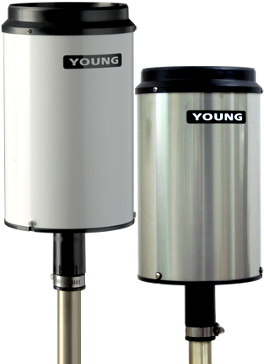
The principle is only half the specification. Heated versions keep working through freezing conditions, stainless-steel bodies stand up to corrosive environments, and the type is selected to suit the installation rather than the other way round.
What matters offshore
- Freezing conditions. A gauge that ices up stops reporting and gives no indication that it has. Heated versions keep the funnel clear and melt snow, so the winter record is continuous rather than a run of zeros.
- Corrosive environments. A rain gauge is an open funnel standing in a salt-laden airstream for its whole service life. Stainless-steel bodies and marine-grade finishes are specified where the atmosphere would make short work of an ordinary gauge.
- Exposure and turbulence. Wind across the mouth of a gauge carries drops past it, and a structure the size of an offshore installation generates its own turbulence. Siting decides how much of the falling rain is actually caught.
- Integration. A pulse output suits a straightforward rainfall total; a serial or Modbus output carries rate, total and status into an environmental monitoring system and makes a fault visible.
- Servicing and calibration. Tipping buckets drift as the mechanism wears and as debris collects in the funnel, so a cleaning and calibration interval belongs in the maintenance plan from the start. We service gauges in place, and calibration returns to the manufacturer are managed on your behalf — the knowledge base explains calibration versus system verification.

![Lambrecht rain[e] weighing rain gauge](https://atlas.wisegroupsystems.com/hubfs/Product_Images/LAMBRECHT-RAINE__product-shot__2026-07-17.png)