
Sensors › Meteorological Sensors
SENSORS
Meteorological Sensors
Temperature, humidity and pressure — the baseline every other reading is interpreted against.
Pressure is what a helicopter’s altimeter is set against, as QNH at sea level and QFE at deck level, so an error here misplaces the deck in the pilot’s instruments. Temperature and humidity decide icing risk, how much a helicopter can lift on a warm day, and the heat stress on people working outside.
Air temperature and humidity
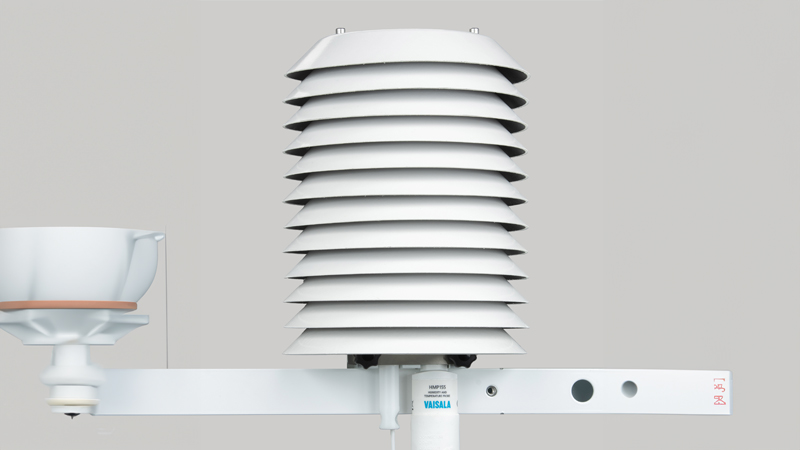
Temperature and relative humidity are usually measured by one combined probe, with dew point, wet bulb and the rest derived from them — either in the sensor or in the software behind it. The probe has to be shielded: direct sun on a bare element reads high by several degrees, so a radiation shield is part of the measurement rather than an accessory to it.
Heated probes are specified where icing or persistent condensation would otherwise corrupt the reading, and intrinsically safe versions where the mast sits in a classified area.
Barometric pressure
Pressure sensors are judged on long-term stability rather than headline accuracy — a barometer that drifts a hectopascal a year is a barometer that quietly misreports deck level. Instruments meeting WMO and air-traffic requirements are used offshore, often with two or three independent pressure elements cross-checking one another so that drift shows up before it matters.
Wind blowing across a pressure port creates an error of its own, so a static pressure head or pressure choke is fitted on exposed installations, and hand-held reference instruments are used to check a barometer in place.
Beyond the basics
The same package often carries further parameters: rainfall, solar radiation, sea temperature by non-contact infrared, water level, snow depth, and distance or angular measurements. We specify and supply these on request as part of a wider environmental monitoring system.
What matters offshore
- Hazardous area. Where the met mast sits inside a classified zone, intrinsically safe temperature, humidity and pressure sensors are used, sharing an Ex e junction box.
- Salt and corrosion. Shields, housings and fixings are specified for a marine atmosphere. An instrument that is perfectly good on a coastal met station may not last a year on a platform.
- Calibration and verification. Pressure and humidity both drift, so a calibration interval is part of owning the instrument. Calibration is a laboratory activity — the manufacturer or a certified laboratory issues the certificate — and we manage the return on your behalf. On site we verify the installed system against recently calibrated references, which is a different activity producing a different document: see calibration versus system verification.
Examples from our range
A few of the meteorological sensors we specify, install, integrate and maintain. We supply more types and variants than are listed here.

Vaisala HMP155
Air temperature and relative humidity, supplied with a Gill radiation shield. A heated-probe variant adds internal heating against icing and condensation.
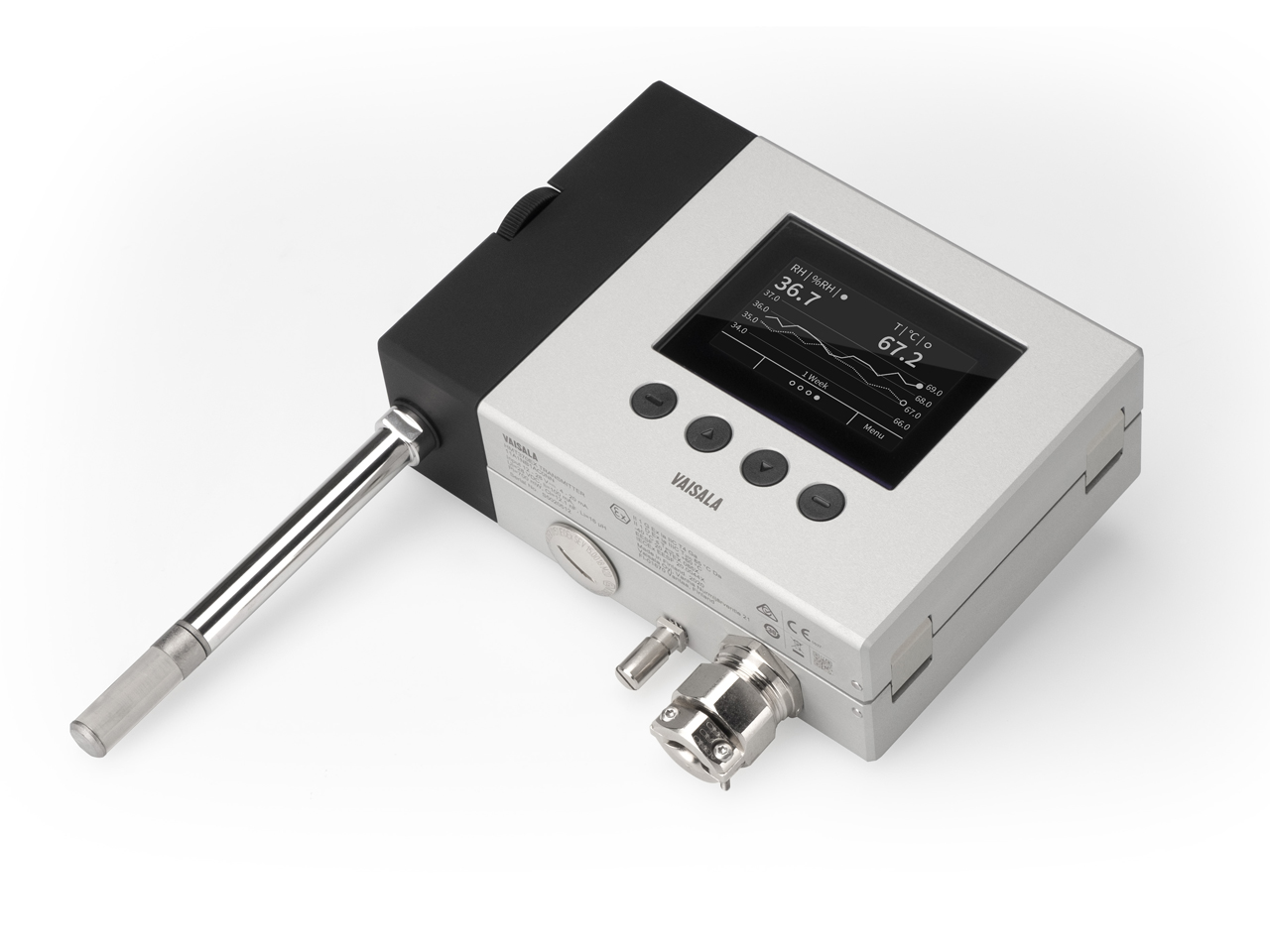
Vaisala HMT370EX
Temperature and humidity for hazardous areas (Ex ia IIC T4), with the HMP373 probe, a solar and precipitation shield, and a shared Ex e junction box with the barometer.
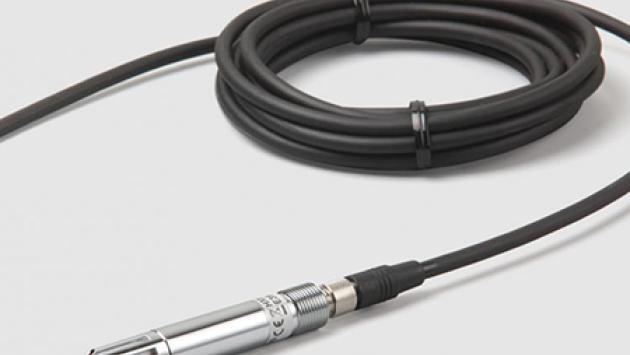
Vaisala HMP110
A miniature, low-power humidity and temperature probe for compact or confined installations such as equipment cabinets, rather than open mast mounting.
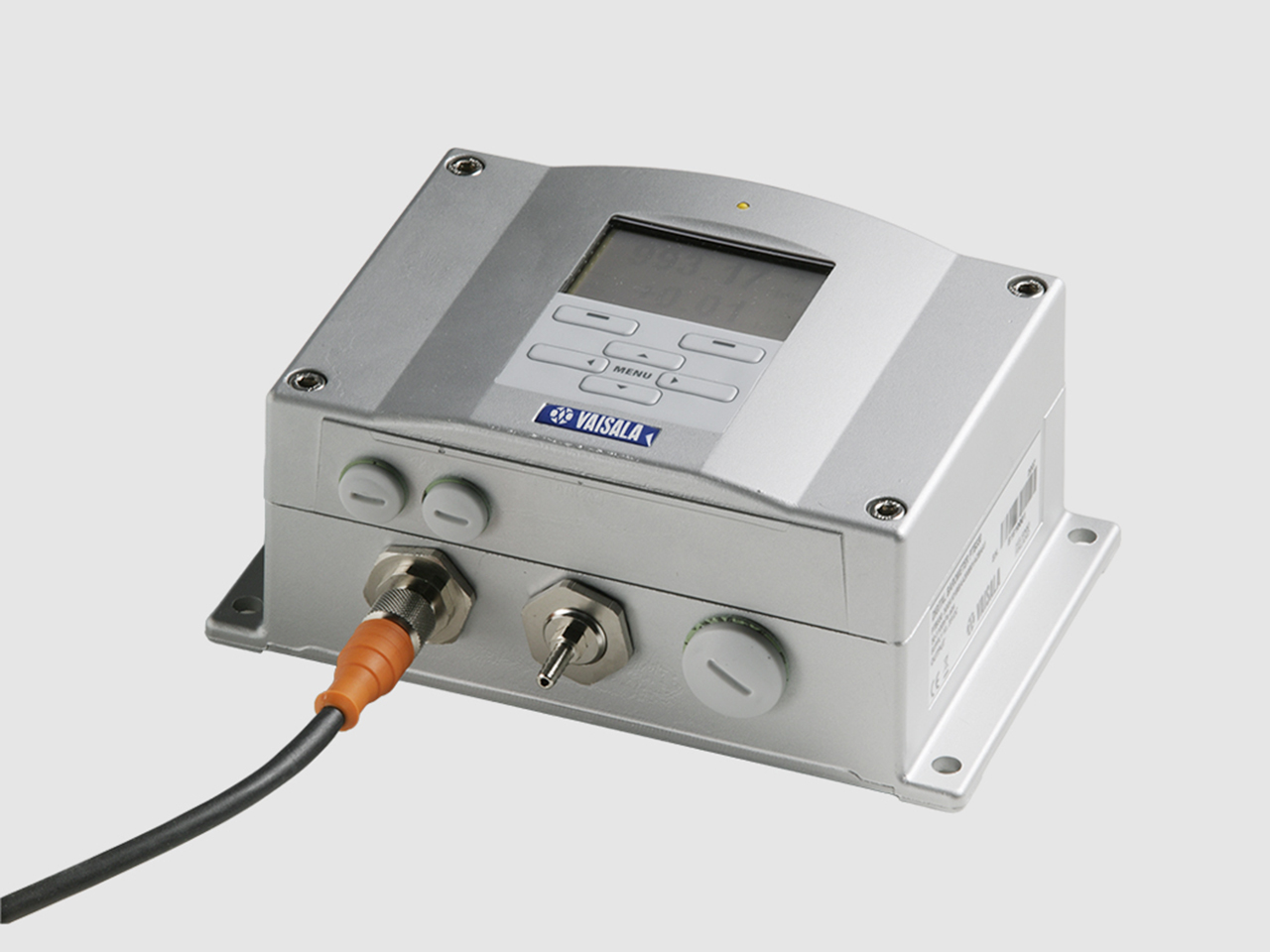
Vaisala PTB330
A dual-sensor digital barometer whose two BAROCAP elements continuously cross-check each other, giving early warning of when to recalibrate. A triple-redundant three-sensor version is also supplied.
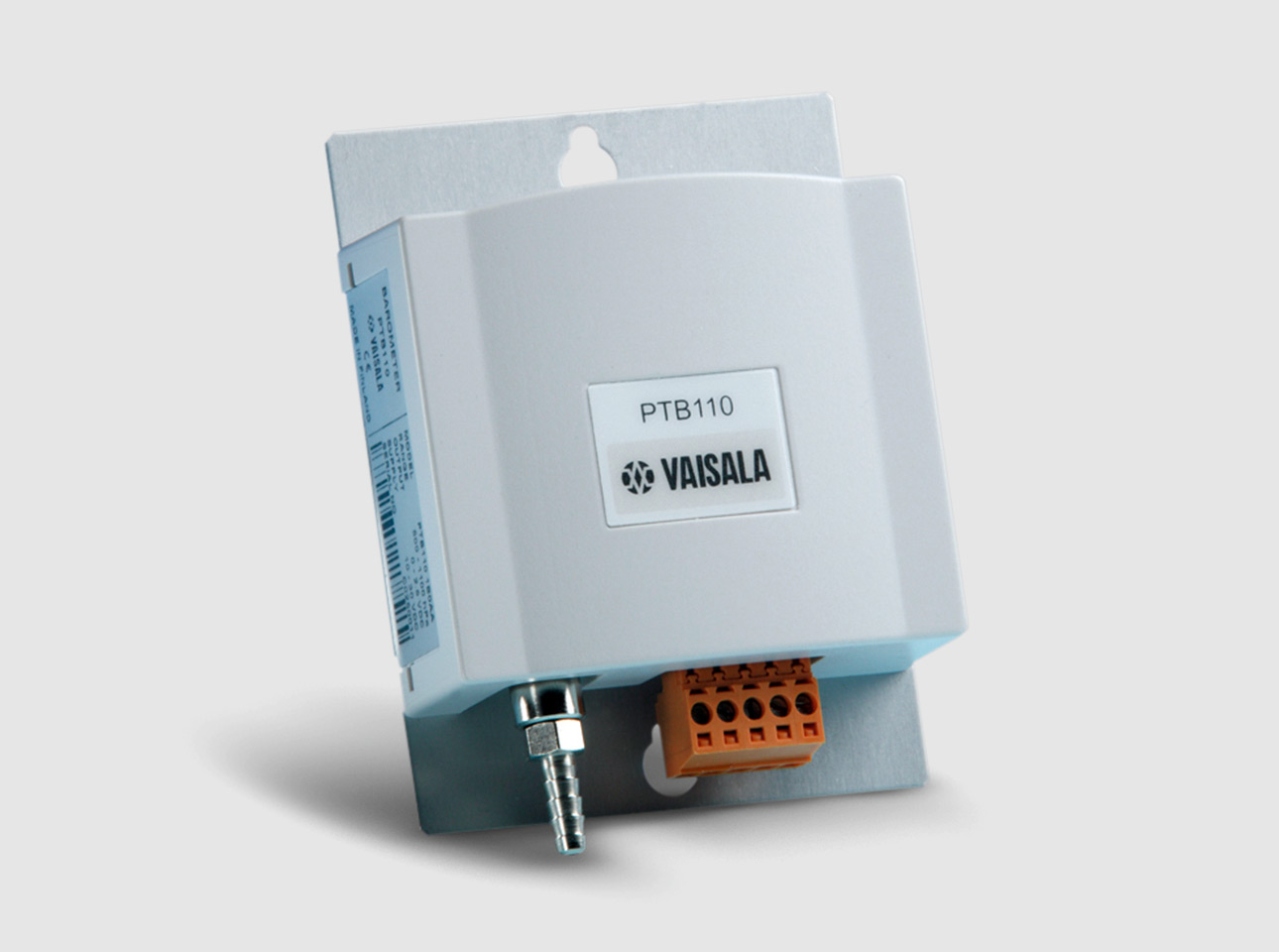
Vaisala PTB110
A BAROCAP barometric pressure sensor covering 500–1100 hPa at ±0.3 hPa, with an analogue output to the data acquisition system.
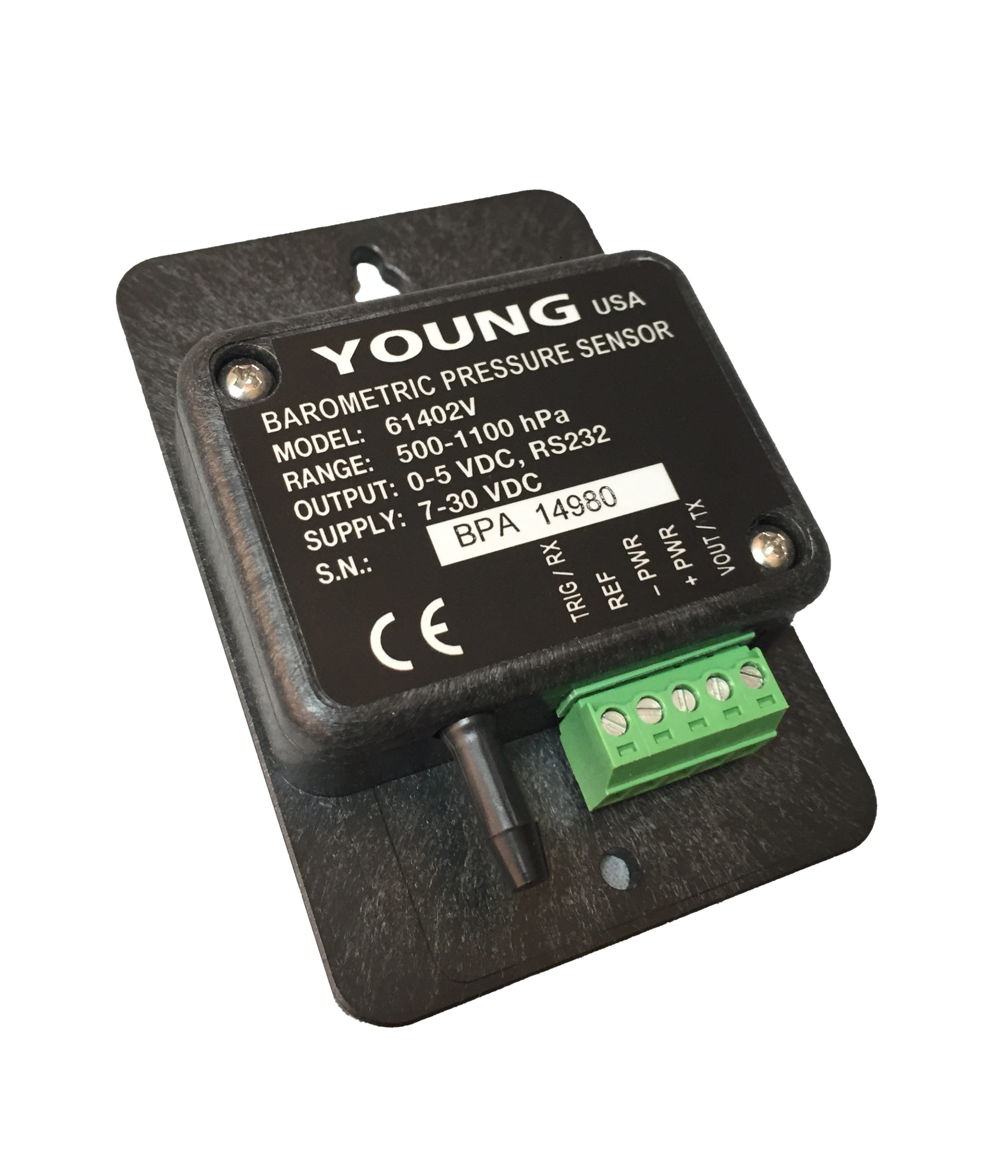
R.M. Young 61402L
A digital barometer covering 500–1100 hPa at 0.3 hPa across the operating temperature range, with both 4–20 mA and serial output.
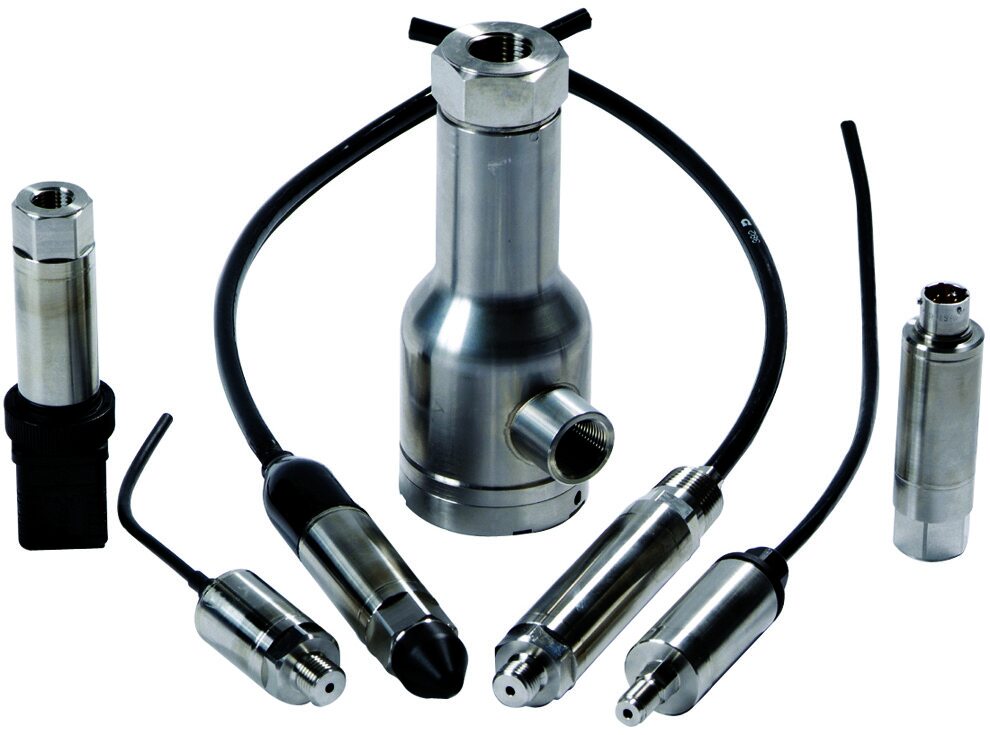
GE Druck PTX50C2
A barometric pressure transmitter with configurable measuring range and output, where the installation calls for a specific span or signal.
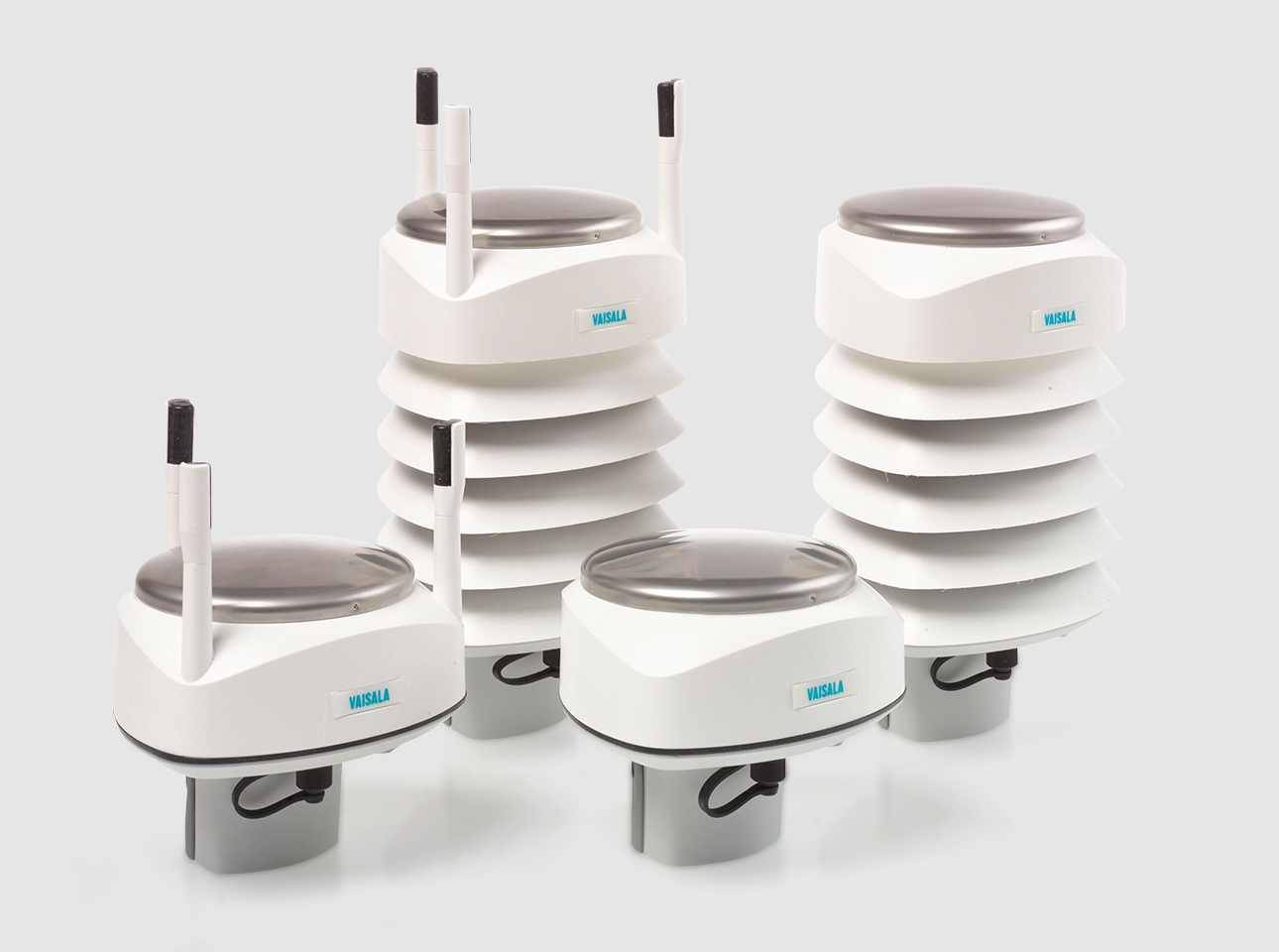
Vaisala WXT536
A combined transmitter measuring pressure, temperature, humidity, rainfall and wind from one compact unit, supplied with static pressure head and radiation shield.
Related
Temperature, humidity and pressure are the core of a weather station and of every environmental monitoring system we deliver, and they are reported to the deck alongside wind and visibility in a helideck monitoring system. See all sensor types.